Laffemas
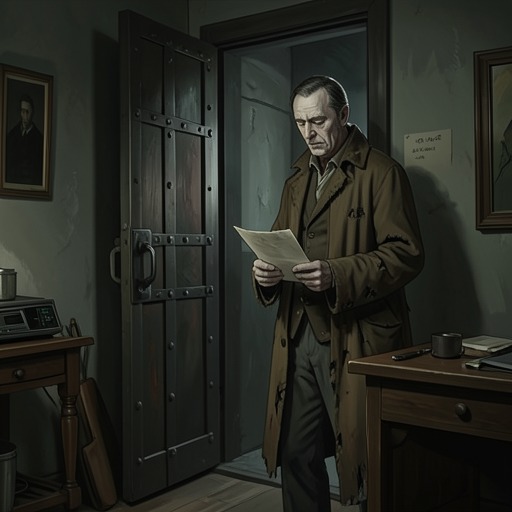
The Three MusketeersLaffemas is presented as one of the most feared operative figures in the machinery surrounding Cardinal Richelieu. Though he remains largely offstage, other characters identify him through the title “the cardinal’s executioner,” making him less a rounded social personality than the human face of clandestine police power. His significance lies in the system he represents: arrests without public explanation, interrogation under coercive conditions, and the conversion of ordinary domestic space into a trap for anyone connected with political suspicion.
Identity and Reputation
Laffemas is associated with the prosecution and persecution of M. Bonacieux. When M. Bonacieux recounts his imprisonment to d'Artagnan, he describes the “persecutions” inflicted by Laffemas and repeatedly calls him “the cardinal’s executioner.” The account links Laffemas with the Bastille, bolts, wickets, dungeons, gratings, and instruments of torture. Even in the absence of a direct scene between Laffemas and his victim, the accumulation of prison imagery establishes his reputation as an official who makes state punishment tangible and personal.
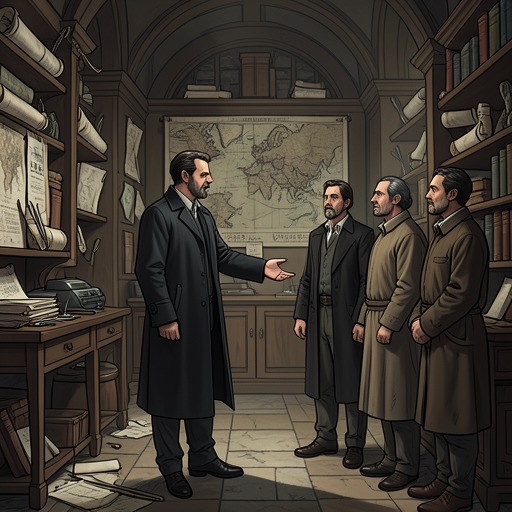
His title also carries a political meaning. Laffemas is not merely an unusually harsh individual; he belongs to a network of procureurs, commissaries, and police agents acting in the interests of Cardinal Richelieu. The narrative therefore places him within a broader apparatus in which the cardinal’s authority operates through delegated men who arrest, search, question, and confine. His feared identity is produced by this combination of personal cruelty and institutional backing.
The Mousetrap and Secret Police Power
Laffemas’s world is explained through the “mousetrap,” a police method in which the arrest of one suspected person is concealed while officers lie in ambush inside the house. The door remains open to visitors, but each person who enters is detained; after several days, the authorities may possess nearly all the regular occupants of the establishment. This procedure transforms hospitality into exposure and innocent arrival into evidence of guilt.
M. Bonacieux’s apartment becomes precisely such a mousetrap. Visitors are captured and interrogated by the cardinal’s people, while a separate passage protects d'Artagnan’s room from immediate detention. Laffemas is not named as the officer physically stationed there, but the episode clarifies the operational environment represented by his title: surveillance is hidden, arrest is secret, and the house itself becomes an extension of police power. The method suspends ordinary expectations of law without openly declaring that law has been suspended.
The interrogations focus on whether Madame Bonacieux or Monsieur Bonacieux has sent messages or objects to anyone. D'Artagnan, listening from above after removing a plank from his floor, recognizes that the questions are really aimed at discovering whether the Duke of Buckingham is in Paris and whether he may meet the queen. The scene connects Laffemas’s reputation to a wider intelligence operation. The apparent investigation of a mercer’s household conceals a search for information about royal diplomacy, the queen’s vulnerability, and a possible political encounter.
Authority, Confinement, and Coercion
Laffemas belongs to a system that treats formal authority as both shield and weapon. M. de Treville later tells Louis XIII that police officers and commissaries arrested Athos in a house, led him through the open street, and threw him into Fort l'Eveque while refusing to show the order authorizing the arrest. The incident does not directly identify Laffemas as Athos’s captor, but it supplies the institutional context in which a figure known as the cardinal’s executioner can operate: men acting under an unseen order can seize even a Musketeer of irreproachable conduct and an almost illustrious reputation.
The same political order reaches into the queen’s chamber. When the king demands her letters, the chancellor approaches Anne of Austria with the deliberate, impersonal resolve of an attendant carrying out a torture commission. This is not Laffemas’s action, but it echoes the mode of power associated with him: official duty becomes a justification for violating privacy, and procedure acquires the appearance of necessity even when it produces terror and humiliation.
The logic extends beyond arrest to authorization. A document later shown to Athos states that, by order of the cardinal and for the good of the state, its bearer has acted as he did. The formula places violent or otherwise extraordinary conduct beneath a political claim to public necessity. Laffemas’s character-name functions within this same grammar. “Executioner” suggests punishment, while “cardinal’s” identifies the authority that makes the punishment possible; the phrase fuses personal violence with delegated sovereignty.
Narrative Function and Significance
Laffemas is important precisely because the narrative does not need to keep him constantly visible. His name travels through the testimony of the persecuted, the architecture of the mousetrap, and the actions of police agents who refuse to disclose their orders. He becomes an index of what lies behind the visible adventures of d'Artagnan and his companions: a political world in which information is hunted through domestic surveillance and resistance is answered with secret imprisonment.
His function also sharpens the contrast between the Musketeers’ code and the cardinal’s methods. d'Artagnan and his companions act through loyalty, personal risk, open combat, and mutual recognition, whereas Laffemas’s institutional world relies on ambush, concealed orders, interrogation, and the capture of people who enter an apparently ordinary home. The opposition is not simply between brave men and a villainous subordinate. It is between visible fellowship and invisible administration, between personal honor and a state that claims the right to make secrecy itself an instrument of justice.
Laffemas therefore remains a secondary character with a substantial structural role. He embodies the coercive underside of Cardinal Richelieu’s political power and gives a name to the fear surrounding secret police action. Through him, the novel shows how quickly a home can become a prison, how royal and ministerial suspicion can descend upon private life, and how the language of duty and the good of the state can authorize acts that resemble the very violence they claim to regulate.